
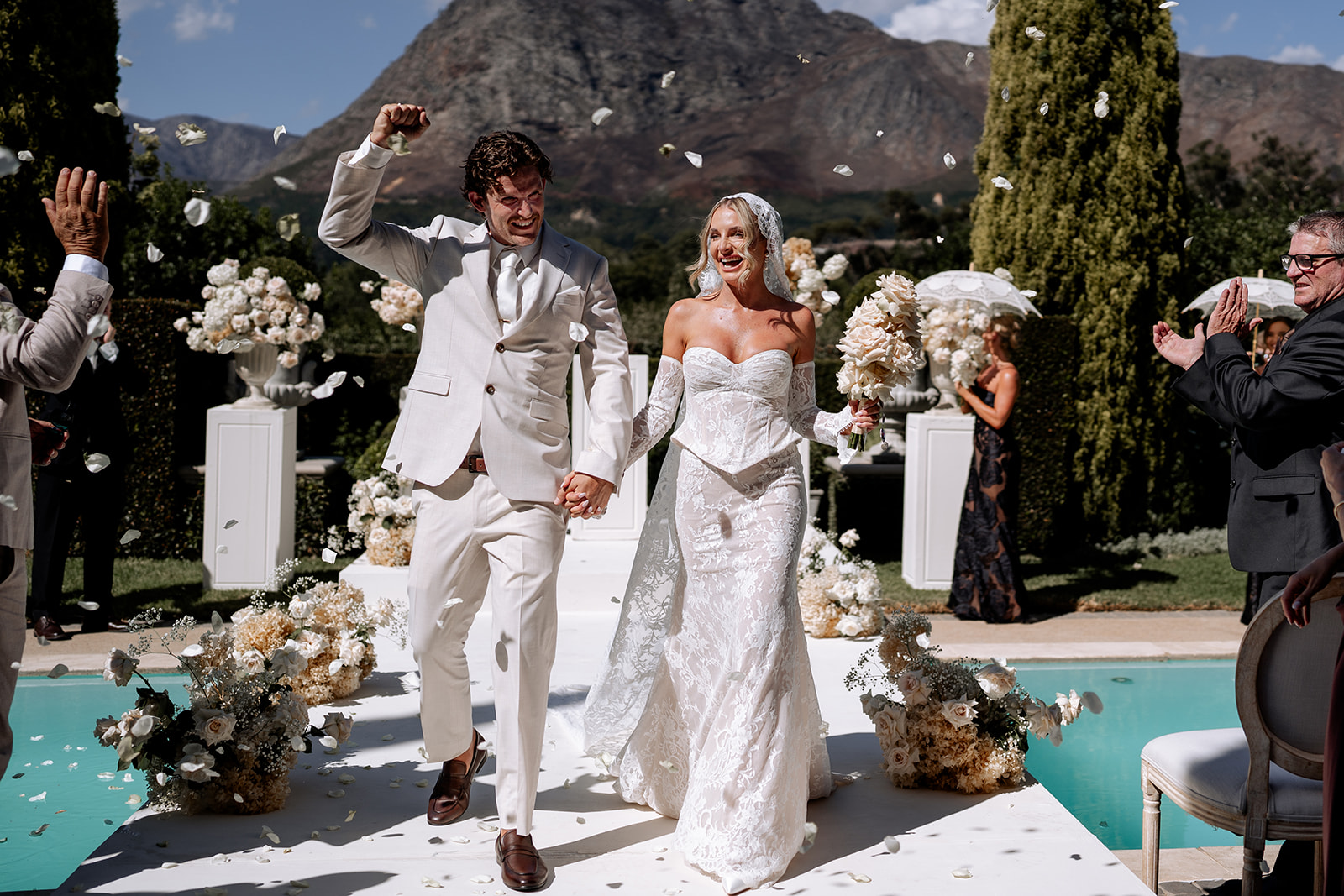
As Wedding planner I accompany couples during weddings in places that not only look beautiful but also blend seamlessly into the entire wedding day. Behind every destination wedding lies a heartfelt wish: to say “I do” in a special place, surrounded by the people you love, in the open air and under a radiant sun.
Such weddings are planned emotionally and visually. But how well are couples prepared for wildfires, heat waves, or storms? As the weather becomes more unpredictable, not only the perfect backdrop is at stake, but also a moment that is meant to be remembered forever.
They belong to me Climate risks in destination weddings Therefore, from the very beginning, we started with the concept. In this post, I will show you what matters most.
Which climate risks are really relevant for destination weddings – and which are underestimated
One Destination Wedding It requires precise planning with a well-thought-out plan. Climate risks become an increasingly significant challenge. What used to be considered a reliable dreamscape is no longer taken for granted today: Heavy rainfall, extreme heat, droughts and violent storms can endanger the most beautiful wedding day.
Climate change is changing weather patterns and causing extreme weather events to occur more frequently or more intensely in many regions. What was previously an unfortunate weather situation is now determining safety, feasibility, and liability. Heat, heavy rain, and storms are becoming a management and insurance issue for events.
Extreme heat and its effects on guests and operations
Extreme heat is, in my view, one of the most frequently underestimated climate risks. What sounds like radiant sunshine and Mediterranean flair can quickly become a health burden for guests. Temperatures above 40 degrees Celsius are realistic in many popular wedding destinations in summer 2026, for example on the Greek islands, in southern France, Italy, and Spain.
It becomes critical especially in combination with tropical nights. When apartments and hotel rooms no longer cool down at night, the burden on all involved increases. Cities store heat longer, and older guests or people with pre-existing conditions may be more likely to fall into critical situations more quickly.
The routine also changes. Makeup and hairstyles last less in extreme temperatures, guests are exhausted, and concentration decreases. What was planned as an elegant garden wedding can now become a physical effort., For the couple as well as for the wedding party.
Wildfires in popular wedding destinations
Wildfires are no longer an abstract risk but a concrete danger in Europe’s most popular destinations. Especially in Greece and France, two of the most popular countries for weddings, the fires are increasing. In August 2026, hundreds of firefighters battled several major wildfires in Greece. The combination of persistent heat waves and strong winds is exacerbating the forest fire situation in France, Spain, Greece and Turkey.
What many couples don't know: Wildfires can make access to a location impossible within a few hours, ‘Blocking flight connections and endangering the safety of guests. Thousands of people have had to be evacuated in recent years, including numerous tourists.’.
This year, it has become clear that inquiries for southern France have significantly decreased following the severe fires near Bordeaux and not far from the Côte d’Azur. Therefore, wedding couples are increasingly taking the risk and adjusting their decisions.
Heavy rain, storms and sudden thunderstorms
Heavy rain and violent thunderstorms are difficult to predict. What looks like a harmless summer day in the morning can turn into a violent thunderstorm with hail, gusty winds, and torrential rain in the afternoon.
The biggest challenge lies in the fact that these events often unfold within a few hours. Even if a tent or shelter is present, strong gusts of wind, hail, or lightning can make an outdoor event dangerous. Tents must then be evacuated in a timely manner, and guests need safe places to retreat to. Technical installations such as lighting, sound, or stage setups must not be operated further in the event of thunderstorm danger.
For me as Wedding planner This means: It doesn’t just need a plan B, but also clear decision criteria for when to take any particular measure. Who decides whether the dinner is moved indoors? At what wind speed should the tent be evacuated? What alternative spaces are actually available?

Which destinations and seasons are particularly critical
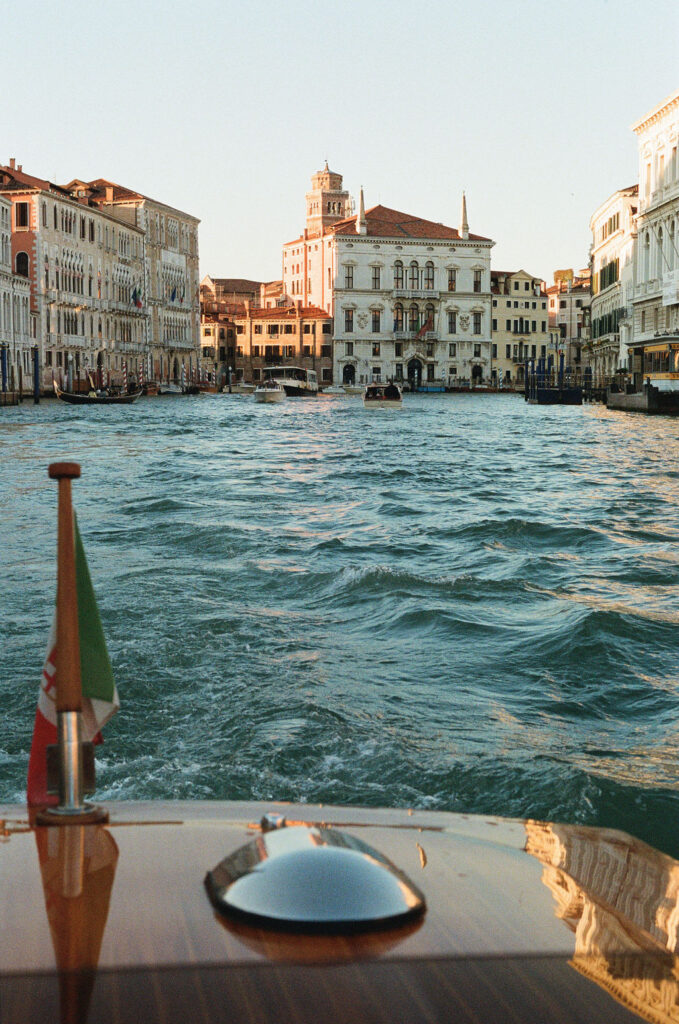
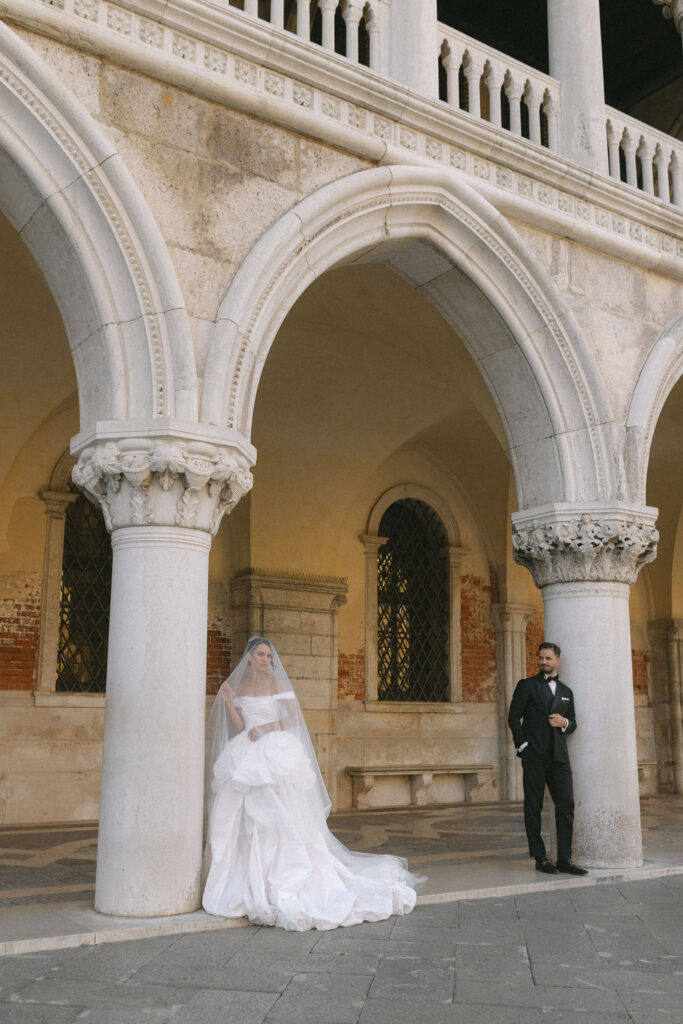
Mediterranean region: Italy, Greece, Southern France, Spain, Cyprus
The Mediterranean region is one of the most popular destinations for destination weddings and at the same time one of the most climatically demanding. In Italy, Greece, Southern France, Spain and Cyprus, extreme heat with temperatures above 35 to 40 degrees, prolonged droughts, acute forest and bush fires, and sudden, violent summer thunderstorms and heavy rain the months of June to September. July and August are particularly critical, as the heat and fire danger reach their peak.
In my opinion, it is worth avoiding the shoulder months in these countries: May and early June or September to October. The temperatures are then more moderate, the forest fire risk is lower, and the weather conditions are generally more reliable.
Nevertheless, unpredictable weather conditions can still occur during the shoulder months. Therefore, fixed indoor alternative arrangements should be checked and contractually secured. High-quality tents and shelters should be booked six to eight months in advance, especially during the high season, as they are often fully booked.
The Maldives and tropical regions
For elopements and tiny weddings, the Maldives are becoming increasingly popular. But even here, there are months that should be avoided. From May or June to September or October, there is a monsoon season., in which heavy rainfall, high humidity and tropical storms are expected.
Anyone planning to get married in the Maldives should focus on the dry months and first check what alternative arrangements the resort offers. Many resorts have weather-protected areas where ceremonies can take place even in the rain. However, the risk that extreme weather conditions will affect the arrival or the ceremony remains.
Climate risks in destination weddings: Germany, Switzerland and Northern Europe as weather-resistant alternatives
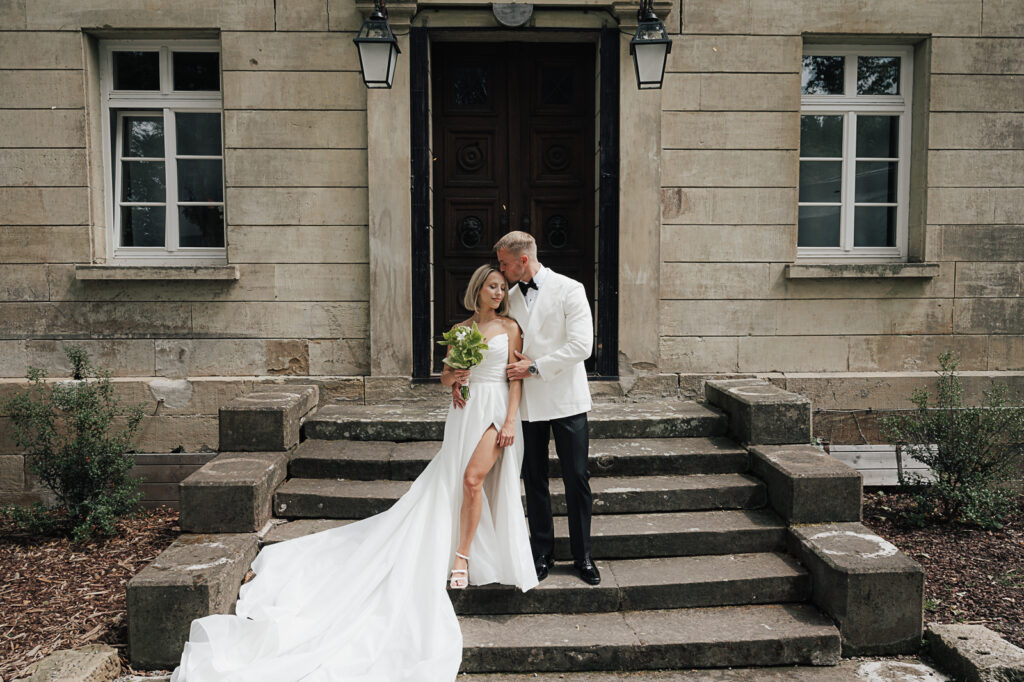
Many couples think of Mediterranean beaches or exotic islands when they get married abroad. Germany, Switzerland and northern European countries such as Sweden often offer more consistent and reliable weather in the summer. as southern destinations. Summer is practically perfect for weddings here. And even in Germany itself, there are places that exude a genuine destination wedding atmosphere – for example, on an idyllic lake, on the Baltic Sea or the North Sea.
The weather at Sansibar or Sturmhaube on Sylt has been consistent and quite reliable in recent years. A beach wedding can be arranged here without any problems, in a quiet bay where you can be completely immersed in your loved ones. Moreover, the price-quality ratio for what you get is top-notch. You’ll also get a lot of „bam!“ for your budget.
That too Grand Hotel Heiligendamm With its stunning backdrop, it truly can be breathtaking. I speak from experience. The beauty of a wedding in Germany is also shown by the fact that Lautenbach Castle Estate in Heilbronn.
Of course, there are also climate risks in Germany – heat waves with temperatures above 40 degrees can also occur here, and heavy rainfall events are now part of summer. However, the infrastructure is better developed, evacuation options are available, and the supply is secured in case of an emergency, which gives you and your guests a significantly higher level of safety.
Monaco, Cannes and Cap Ferrat: Exceptions on the Côte d’Azur
Not all regions on the Côte d’Azur are equally affected by forest fires. Monaco, Cannes and Cap Ferrat are among the safer places to get married when it comes to climate. Accessibility is more convenient logistically, and the infrastructure is excellent.
Locations like the Château Saint-Martin & Spa, What I personally love and appreciate about these places is that they not only offer a breathtaking backdrop; they also have professional safety protocols and experienced teams prepared for weather risks.
Extreme heat, sudden storms or changing weather conditions can also occur at any time here. Indoor alternatives, heat protection measures and contractual safeguards are therefore also part of the foundation of every wedding planning in the Côte d’Azur. Anyone who wants to get married in this region should avoid the shoulder months, systematically monitor the weather development and work together with a wedding planner to plan the perfect day. Experienced wedding planner Prepare alternatives.


What you should consider when choosing a location and travel time
A dream wedding should not rely solely on hope and beautiful weather. It requires forward-thinking decisions, thoughtful alternatives, and the confidence to be well prepared even when the weather doesn’t cooperate. The most beautiful place and the most beautiful wishful thinking are of no use if the once-in-a-lifetime dream crumbles in minutes.
Check historical climate data and current weather trends
Careful weather protection planning begins with a look at the historical climate data for the planned period. How were the temperatures in previous years? How often did heavy rain, thunderstorms, or extreme heat occur? This information is not a guarantee, but it provides you with a reliable basis for your decision.
If a destination has regularly reached temperatures above 40 degrees Celsius in July in the past five years, the probability is high that this will also be the case this year.
Incorporate infrastructure, accessibility, and evacuation options
A dreamlike location loses its value if it is not accessible in an emergency or cannot be used safely. Therefore, when choosing a location, it should not only focus on aesthetics and ambiance, but also on infrastructure, accessibility, and evacuation options.
- How far is the location from the nearest airport?
- Are there alternative routes to get there if roads are closed?
- How quickly are rescue crews on the scene?
- Are there hospitals, fire stations, or safe places to retreat nearby?
Especially in the case of destination weddings, road closures, limited transport connections, or long distances can become decisive factors. When extreme heat or a storm approaches, guests need to be quickly moved to safe areas. These questions may seem unromantic at first, but for me they are an essential part of the planning process.
Indoor alternatives and weather-protected rooms as a permanent feature
A location should not only have a stunning outdoor area, but also have equivalent indoor alternatives. These spaces must actually function in terms of atmosphere, capacity, technology, catering, and design. It’s not about any substitute space; it’s about a space that preserves the magic of your wedding, one where the lighting is perfect, the acoustics are right, and your guests feel comfortable.
Many venues offer weather-protected areas, but not all of them are suitable for a wedding. Some rooms are too small, others are too dark, and some have acoustic problems. Therefore, these alternatives should not only be known in theory but also visited, rehearsed, and contractually secured.
Realistic expectations: Why the most beautiful plan isn't always the best plan
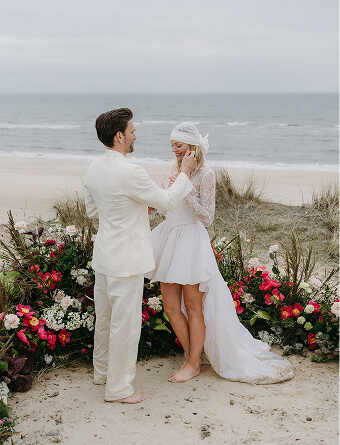
Basically, there is a distinction to be made between dreams and reality. When getting married abroad, the idea of a wedding on the beach with your feet in the sand and the sound of the sea in the background is very appealing. However, you should also be aware that it is extremely hot in the south in the summer and that you have to expect eager vacationers in swimsuits.
On Mallorca, one of the most popular destinations for weddings, beach weddings are no longer possible., Because the beaches are public and under nature protection. Few people know this. So you mostly have to rely on hotels and locations here, and the planning has to be coordinated accordingly.
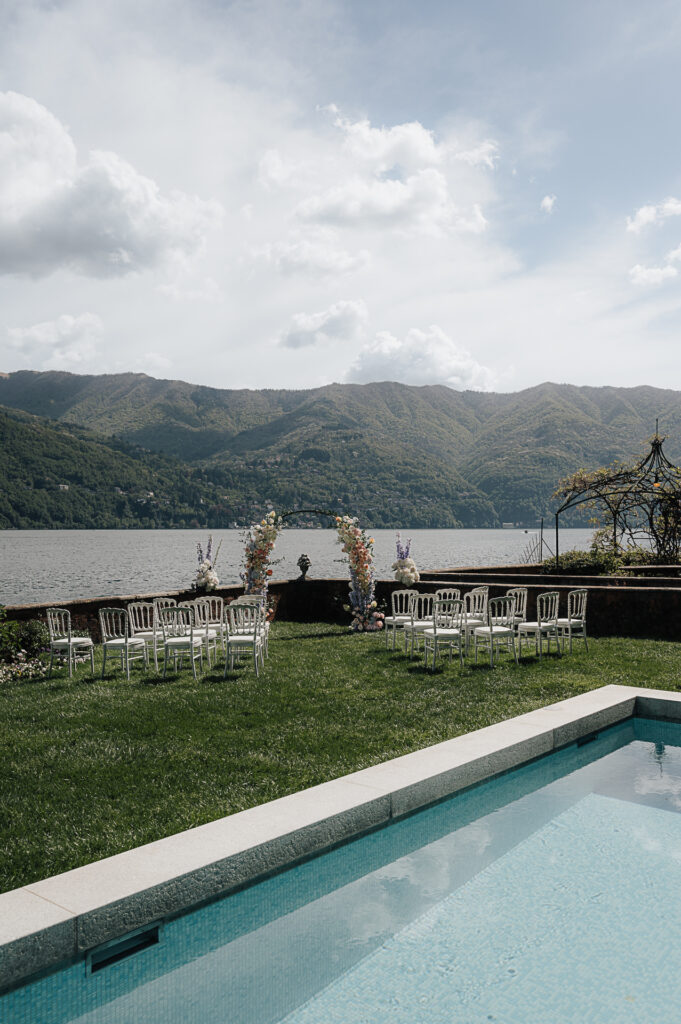
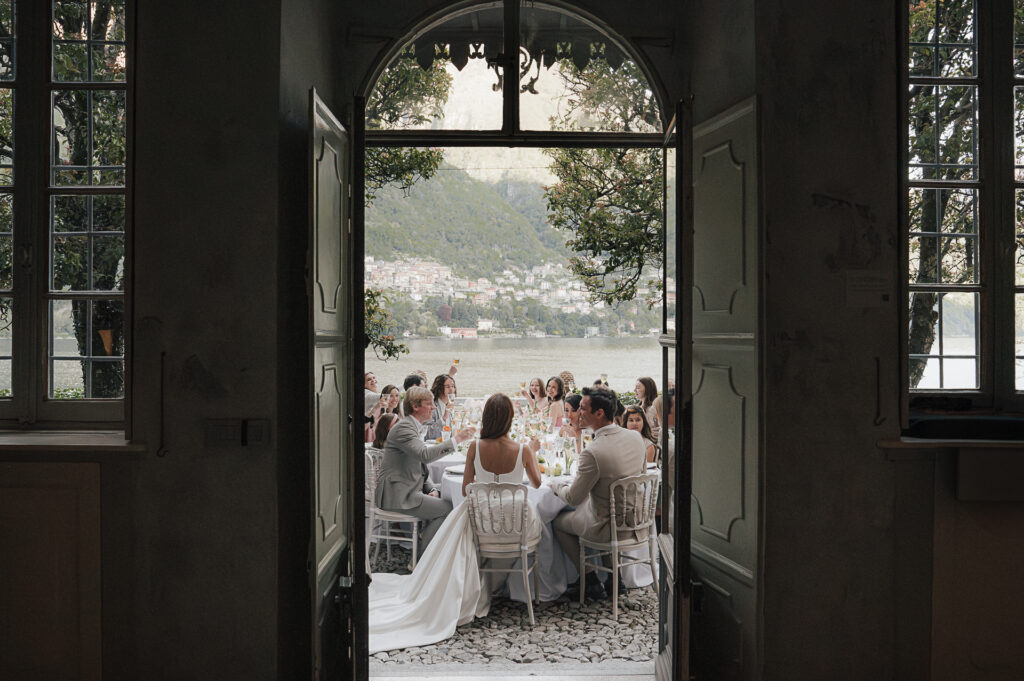
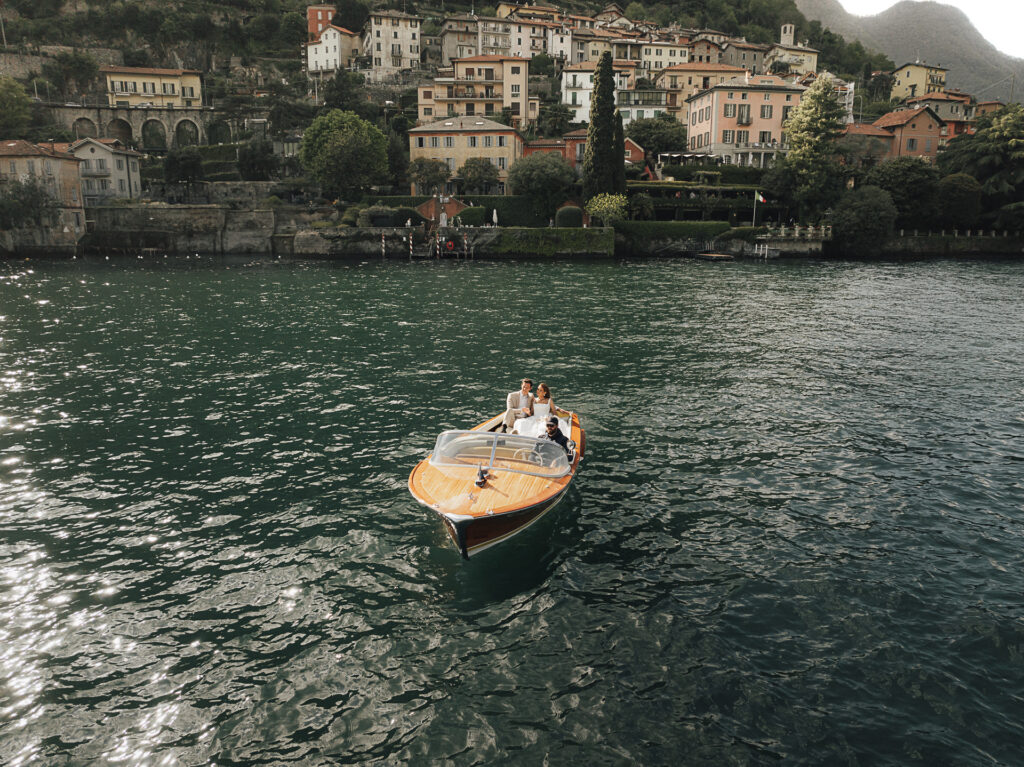
I also very much enjoy planning weddings on Lake Como. Nevertheless, I have already convinced couples who wanted to get married there to stay in the interior for their events. The bride and groom and their guests were no less happy, on the contrary. In the end, it was truly said in the truest sense of the word: SAY WOW.
It’s not about downplaying your dreams; it’s about planning them in such a way that they actually work: emotionally, aesthetically, and safely.
Plan B: The wedding under changed conditions
Plan B does not mean that the wedding loses its charm. It is about preserving the atmosphere and the most important emotional moments even when the original concept is not feasible.
These include:
- Equivalent indoor alternative
- Weather-resistant ceremony concept with an alternative seating area and flexible flow
- Heat protection concept: shade, drinking water, cooling, adapted time windows
- Heavy rain and wind concept: safe routes, protected areas, clear termination criteria
- Fixed deadlines and decision-making processes
What is crucial is that these alternatives not only exist on paper; they must be coordinated with locations and service providers, logistically feasible, and financially transparent.
Plan C: If the location is no longer safe to use
Plan C is used when an alternative space solution is no longer sufficient. This can be the case with an official evacuation order, in the event of an acute forest fire danger, on a closed access road, or in the event of severe weather conditions.
These include:
- an alternative location, which had been previously checked for accessibility, availability, and capacity
- a mobility and transfer plan for emergencies
- a communication plan with clear guidelines for guests, service providers and hotels
- a realistic decision point – coordinated with the location and service providers
- clear contractual arrangements regarding rebookings, cancellations, additional costs and responsibilities – including insurance issues
The rule is: In an acute emergency situation, relocation is not automatically the right solution. Sometimes it is safer to postpone or cancel the event. No wedding, however emotional and elaborate it may be, justifies exposing people to a preventable risk. In the worst case, a wedding must be cancelled. We have never had to face this absolute worst case scenario before. However, one can never rule it out.

Weather observation before the wedding: From when and with which sources
WarnWetter app from the German Weather Service and official warnings
Do not use standard mobile phone apps for your wedding, as these often work with automated, inaccurate data without human meteorologists. Instead, use professional services. The WarnWetter app from the German Weather Service is the absolutely most reliable source for official weather warnings in Germany. Activate the push notifications for your exact wedding location and you will be informed about current weather hazards on site.
Tile weather and multi-model forecasts for precise predictions
On Kachelmannwetter.com you can use the „Multi-Model Forecast“ function to compare the predictions of different weather models for your wedding location at a glance. The more similar the predictions are, the higher the probability that the weather will actually develop in that way.
NINA app and KATWARN for disaster protection notifications
NINA and KATWARN are disaster protection apps that immediately send a push notification when extreme weather events such as hail, storms, or tornadoes threaten. These apps are especially important during acute emergency situations. They not only inform about weather hazards but also about evacuation orders, road closures, and other safety-related events.
From when weather forecasts become reliable and decisions have to be made
Weather forecasts usually become increasingly reliable about seven to ten days before the event. Three to five days before, they are significantly more precise.
On the wedding day itself, the Live Radar is your best friend for doing that. Wedding couple photoshoot Set the rain break to the minute. The Weatheronline rain radar shows in real time where precipitation is located, how strong it is, and in which direction it is moving. This allows for a quick decision on whether a program point can take place or needs to be postponed.
Some adjustments are possible on the wedding day itself, while others require several days of advance planning. Therefore, pre-determined decision deadlines are essential for any good planning.
Contracts, Cancellations, and Insurance: What you should consider regarding climate risks when booking destination weddings
It always applies: First check, then act. The couple has gotten engaged and is basking in happiness, which is absolutely understandable and understandable from a human perspective. When the engagement ring sparkles daily, who thinks about insurance and possible mishaps? One has only the dreamlike setting in front of them: the beautifully dressed guests, themselves in a dreamy white designer dress on their way to the altar, and sparkling champagne glasses.
It’s easy to forget the essentials for planning. That’s exactly why I’m here as Wedding planner Yes. I draw attention to what is needed to make a destination wedding as stress-free as possible and ultimately also implement it.
Before you book a wedding venue or service provider, you should carefully review the cancellation and rebooking policies. What happens if you have to postpone the wedding? What deadlines apply, what costs are involved?
Many contracts contain clauses regarding force majeure, but not all of them are clearly worded.
- What exactly qualifies as force majeure?
- Will a heat wave be included in that?
- Is a forest fire within ten kilometers considered sufficient reason?
- What evidence must be provided?
The clearer the arrangements are in advance, the less uncertainty there will be in the event of an emergency.
Some venues offer flexible rescheduling options, others require deposits even in the event of cancellation. Some service providers can respond quickly, while others are booked months in advance. This information should be transparent at the time of contract signing and not be discussed only a few days before the wedding. I work closely with venues and service providers to ensure that all parties are aware of the available options and the consequences of any changes.
Wedding insurance: benefits, exclusions and limits
Wedding insurance is a special event insurance. It provides financial protection in the event that the wedding cannot take place as planned. It usually covers cancellation, postponement, or rescheduling of the celebration.
The formula goes like this: The more expensive the celebration, the more likely it is that insurance coverage is advisable.
If the dream location is lost due to the organizer’s insolvency, the wedding insurance covers additional costs for rebookings and refunds for deposits already paid. In the event of damage caused by fire or weather to the couple’s property, cancellation fees are covered. Also, obstacles to arrival due to weather, force majeure, or unexcusable cancellations due to travel by air or rail are covered.
It is important to know the limits. Insurance companies often do not pay for cancellation if pre-existing conditions are the reason, because only unforeseeable events are covered. Some insurance companies exclude damages caused by force majeure. If the event venue is destroyed by a storm, some insurance companies will not cover the costs for cancellation or postponement.
An insurance company can protect you, but it cannot cover all risks. Therefore, you should carefully review the terms, have realistic expectations, and also make clear contractual arrangements with the venue and service providers.
Heat protection and guest safety: Which measures really work
Adjust event times: Before 10 a.m. or after 6 p.m.
The simplest and most effective measure against extreme heat is adjusting the event times. Event activities before 10 am or after 18 pm will protect you and your guests from the highest temperatures. The sun's rays are strongest between 10 and 16 o'clock, and the temperature is highest between 15 and 18 o'clock. Especially during the midday hours, heat and UV exposure are particularly high.
Specifically, this means that the free wedding ceremony takes place in the early morning or in the evening, the dinner begins after sunset, and the bridal couple photoshoot is postponed to cooler hours. It sounds simple, but it often makes the difference between a stressful and a enjoyable wedding.
Provide shade, drinking water, and cooling facilities
Especially on hot summer days, the outdoor areas of a wedding venue can quickly get too hot. It is therefore all the more important to create sufficient shady retreat spots for your guests. Sunshades, elegant pavilions, or the natural shade of large trees not only provide protection from direct sunlight, but can also be beautifully integrated into the design concept of your wedding. In addition, fans, well-ventilated seating areas, or pleasantly temperate indoor spaces can provide cooling comfort.
What is of course essential in summer temperatures are sufficient refreshment options for your guests. Whether chilled water, homemade lemonade or light summer drinks – it is important that drinks are readily available at all times and that your guests can easily refresh themselves in between.
My tip: Richtet an verschiedenen Stellen eurer Hochzeitslocation kleine Wasserstationen ein, an denen sich eure Gäste jederzeit bedienen können, ohne lange an der Bar warten zu müssen. Schön gestaltete Getränkespender mit Wasser, Zitrone, Minze oder frischen Beeren können dabei sogar zu einem dekorativen Element eures Hochzeitskonzepts werden.
Viele meiner Brautpaare bereiten für ihre Gäste außerdem kleine Goodie-Bags vor. Gerade bei einer Sommerhochzeit lassen sich darin praktische Kleinigkeiten unterbringen, die an heißen Tagen besonders willkommen sind:
- Sonnencreme mit hohem Lichtschutzfaktor
- Eine kleine Wasserflasche
- Ein Handventilator oder eleganter Fächer
- Ein kleines Erfrischungsspray
- Ein kühlendes Tuch für Gesicht oder Nacken
Solche liebevollen Aufmerksamkeiten zeigen euren Gästen, dass ihr nicht nur an eine wunderschöne Feier, sondern auch an ihr Wohlbefinden gedacht habt. Denn genau das gehört für mich zu einer gelungenen Hochzeit: dass sich alle Gäste sicher, willkommen und rundum gut aufgehoben fühlen.
Viele Gäste unterschätzen die Belastung durch extreme Hitze. Deshalb ist es sinnvoll, sie vorab zu informieren. Eine kurze Information in der Einladung oder auf der Hochzeitswebsite kann auf die zu erwartenden Temperaturen hinweisen und Empfehlungen zu Kleidung, Sonnenschutz und Flüssigkeitszufuhr geben.
Körperliche Anstrengungen minimieren und Ruhezonen einplanen
Bei extremer Hitze sollten körperliche Anstrengungen auf ein Minimum reduziert werden. Lange Fußwege, ausgedehnte Fototermine in der prallen Sonne oder Tanzprogramme in der Mittagshitze können für Gäste schnell zur Belastung werden.
Ruhezonen mit Sitzmöglichkeiten, Schatten und Erfrischungen geben Gästen die Möglichkeit, sich zurückzuziehen und abzukühlen. Manche Locations bieten klimatisierte Innenräume für die heißesten Stunden an. Auch der Ablauf lässt sich anpassen, etwa durch eine kürzere Zeremonie, längere Pausen zwischen den Programmpunkten und den Verzicht auf körperlich anstrengende Aktivitäten. Das mindert die Schönheit eurer Hochzeit nicht, sondern sorgt dafür, dass eure Gäste den Tag wirklich genießen können.
Wann eine Hochzeitsplanerin den Ablauf ändert – und warum Erfahrung den Unterschied macht
Was tun, wenn wenige Tage vor der Hochzeit Waldbrände, extreme Hitze, Starkregen oder eine Unwetterwarnung angekündigt werden? Das ist eine der entscheidendsten Fragen, die wir sehr ernst nehmen. Wir stellen sie uns nicht erst wenige Tage vor der Hochzeit, sondern bereits zu Beginn der Planung. So wisst ihr von Anfang an, wie es im Ernstfall weitergeht.
Systematische Risikoerkennung statt Schönreden
Meine Kompetenz zeigt sich nicht darin, dass ich für jedes Problem eine Lösung garantieren kann. Das wäre angesichts realer Naturgefahren unseriös. Unsere Aufgabe ist es, Risiken nicht schönzureden, sondern sie frühzeitig zu erkennen, realistisch einzuschätzen, Grenzen offen zu kommunizieren und professionell zu managen.
Echte Expertise zeigt sich nicht nur darin, wie perfekt eine Hochzeit bei Sonnenschein funktioniert, sondern vor allem darin, wie souverän wir auf Unvorhergesehenes reagieren. Deshalb beschäftigen wir uns bereits im Vorfeld intensiv mit den Klimarisiken bei Destination Weddings am jeweiligen Hochzeitsort. Dazu gehören die saisonalen Wetterbedingungen, regionale Gefahren wie Waldbrände, extreme Hitze oder Starkregen und die Frage, welche Ausweichmöglichkeiten verfügbar sind.
Wir prüfen, welche Alternativen realistisch umsetzbar sind, stimmen uns mit Dienstleistern und Locations ab und entwickeln konkrete Planungsoptionen für unterschiedliche Szenarien.
Koordination mit Location, Dienstleistern und Behörden
Zeichnet sich wenige Tage vor der Hochzeit eine kritische Wetterlage ab, bewerten wir die Situation anhand verlässlicher Informationen und aktueller Warnmeldungen. Gemeinsam mit dem Brautpaar, der Location und den beteiligten Partnern entscheiden wir, welche Maßnahmen notwendig und sinnvoll sind. Das kann bedeuten, den Ablauf anzupassen, eine wettergeschützte Alternative zu aktivieren, bei extremer Hitze zusätzliche Maßnahmen zum Schutz der Gäste zu organisieren oder im Ernstfall eine Verlegung in Betracht zu ziehen.
Gerade in emotionalen Ausnahmesituationen brauchen Brautpaare jemanden an ihrer Seite, der den Überblick behält, klare Entscheidungen vorbereitet und Lösungen findet, statt zusätzliche Unsicherheit entstehen zu lassen. Wir können das Wetter nicht kontrollieren. Aber wir können beeinflussen, wie gut wir darauf vorbereitet sind. Genau darin liegt für mich der Wert einer erfahrenen Hochzeitsplanerin: meinem Brautpaar auch dann Sicherheit, Orientierung und Vertrauen zu geben, wenn die äußeren Umstände nicht mehr planbar erscheinen.
Entscheidungskriterien: Sicherheit, Gesundheit, Durchführbarkeit
Bei einem Heat Index von 100 bis 104 Grad Fahrenheit (etwa 38 bis 40 Grad Celsius) sollte genau geprüft werden, ob die Hochzeit wie geplant stattfinden kann. Besonders für ältere Gäste, Kinder oder Menschen mit gesundheitlichen Einschränkungen kann die Hitze schnell zur Belastung werden. In solchen Fällen ist es sinnvoll, den Ablauf anzupassen, körperlich anstrengende Aktivitäten zu vermeiden und gegebenenfalls in klimatisierte Innenräume auszuweichen. Ab einem Heat Index von 105 Grad Fahrenheit (rund 41 Grad Celsius) sollte eine Verlegung oder Verschiebung der Feier ernsthaft in Betracht gezogen werden.
Für mich gehört deshalb auch der Umgang mit extremer Hitze zu einer sorgfältigen Hochzeitsplanung. Genauso wie es einen Plan B für Regen gibt, sollte im Vorfeld geklärt sein, was bei außergewöhnlich hohen Temperaturen passiert. Wo können sich die Gäste abkühlen? Welche Programmpunkte lassen sich nach drinnen verlegen? Und wer entscheidet, wann Anpassungen notwendig sind? Wichtig ist außerdem, dass jemand die Wetterentwicklung und mögliche Hitzewarnungen im Blick behält, damit bei Bedarf rechtzeitig reagiert werden kann.
Dokumentation und Verantwortung im Krisenfall
Gerade bei extremen Wetterbedingungen ist es wichtig, nicht nur die richtigen Entscheidungen zu treffen, sondern diese auch sorgfältig zu dokumentieren. Dazu gehört, die Wetterentwicklung und mögliche Warnungen festzuhalten, Absprachen mit der Location und den beteiligten Dienstleistern zu dokumentieren und nachvollziehbar zu machen, warum bestimmte Entscheidungen getroffen wurden. Muss eine Hochzeit kurzfristig angepasst, unterbrochen oder sogar abgesagt werden, sollte klar festgehalten sein, welche Umstände dazu geführt haben und wer an der Entscheidung beteiligt war.
Eine sorgfältige Dokumentation schafft Transparenz und kann im Nachhinein helfen, Entscheidungen zu begründen. Gerade wenn es um mögliche Haftungsfragen oder finanzielle Folgen geht, kann das entscheidend sein.
Aus meiner Praxis: Wenn das Wetter die Planung verändert
Bei einer Hochzeit in Forte dei Marmi mussten wir kurzfristig umplanen. Eigentlich sollte das Hochzeitsdinner unter freiem Himmel stattfinden, doch die hohen Wellen und ein aufziehendes Gewitter mit starken Blitzen machten uns einen Strich durch die Rechnung.
Glücklicherweise waren wir auf eine solche Situation vorbereitet. Die Location reagierte schnell und unkompliziert, sodass wir das Dinner kurzerhand nach drinnen verlegen konnten. Und genau das ist das Schöne an Forte dei Marmi: Viele Locations bieten nicht nur traumhafte Außenbereiche, sondern auch wunderschöne Innenräume, die einer Feier unter freiem Himmel in nichts nachstehen.
Solche Situationen zeigen, wie wichtig eine gute Vorbereitung und ein durchdachter Plan B sind. Wenn die Location passende Alternativen bietet und alle Dienstleister flexibel zusammenarbeiten, muss eine Wetteränderung keineswegs die Stimmung trüben.
Am Ende genossen das Brautpaar und seine Gäste ein wunderschönes Dinner mit Blick auf das Meer. Zwar nicht wie ursprünglich geplant unter freiem Himmel, aber in einer ebenso besonderen Atmosphäre. Und genau darauf kommt es letztlich an: dass das Brautpaar seinen Tag genießen kann, auch wenn nicht alles nach dem ursprünglichen Plan verläuft.


Häufige Fragen zu Klimarisiken bei Destination Weddings
Kann ich eine Hochzeit im Ausland kurzfristig verschieben, wenn Waldbrände oder Unwetter drohen?
Grundsätzlich ja. Wie flexibel und wie teuer das wird, hängt von euren Verträgen ab. Fristen und Kosten solltet ihr deshalb schon beim Buchen klären. Ordnen Behörden eine Evakuierung an, führt an einer Absage kein Weg vorbei.
Ab welcher Temperatur wird eine Hochzeit im Freien gesundheitlich bedenklich?
Kritisch wird es ab einer gefühlten Temperatur (Heat Index) von etwa 38 bis 40 °C. Ab rund 41 °C gehört die Feier nach drinnen oder auf einen anderen Termin. Kühlt es nachts nicht ab, steigt die Belastung zusätzlich.
Welche Destinationen gelten aktuell als besonders sicher im Hinblick auf Klimarisiken bei Destination Weddings?
Im Sommer punkten Deutschland, die Schweiz und Skandinavien mit verlässlicherem Wetter, zum Beispiel Sylt oder Heiligendamm. An der Côte d’Azur sind Monaco, Cannes und Cap Ferrat die sichereren Adressen. Rund ums Mittelmeer sind Mai, Juni oder September und Oktober die bessere Wahl als Juli und August.
Wer entscheidet im Ernstfall, ob die Hochzeit stattfindet oder abgesagt wird?
Brautpaar, Hochzeitsplanerin und Location entscheiden gemeinsam, und zwar anhand vorher festgelegter Kriterien. Behördliche Anordnungen haben immer Vorrang.
Was sollte in einem Hitzeschutzkonzept für eine Hochzeit enthalten sein?
Im Kern geht es darum, der Mittagshitze auszuweichen und für Abkühlung zu sorgen. Das Programm gehört in die Morgen- oder Abendstunden. Dazu kommen Schatten, Wasser, Ruhe- und Rückzugsorte, Hinweise für die Gäste vorab und eine Person, die die Wetterlage im Blick behält.
Mein Fazit zu Klimarisiken bei Destination Weddings
Als Hochzeitsplanerin lege ich großen Wert darauf, dass sich eine Destination Wedding leicht, emotional und unvergesslich anfühlt. Damit das gelingt, gehören auch die Szenarien in die Planung, über die niemand gerne spricht.
Ich möchte, dass ihr euren Hochzeitstag genießen könnt, ohne ständig darüber nachdenken zu müssen, was passieren könnte. Dieses Gefühl von Sicherheit entsteht durch durchdachte Planung, realistische Alternativen und erfahrene Begleitung im Hintergrund. Für mich ist eine Hochzeit erst dann wirklich professionell geplant, wenn nicht nur der schönste Fall berücksichtigt wurde, sondern auch der schwierigste.
Wenn ihr von einer Destination Wedding träumt, bei der Planung noch unsicher seid oder euch einfach professionelle Unterstützung wünscht, lasst uns gerne über eure Vorstellungen und Wünsche sprechen. Gemeinsam finden wir heraus, wie ich euch bei der Planung eurer Traumhochzeit unterstützen kann. I look forward to meeting you all!